El Paso · TX April 2026
Dispatch 01 · Dignity Before Damage · Vol. 01
Four
Minutes.
Case File · Public Record
United States
Removal Hearing
Unaccompanied.
Maya · Guatemala
Different state
Age 11
Chapter I — The Room
Capítulo I — La Sala
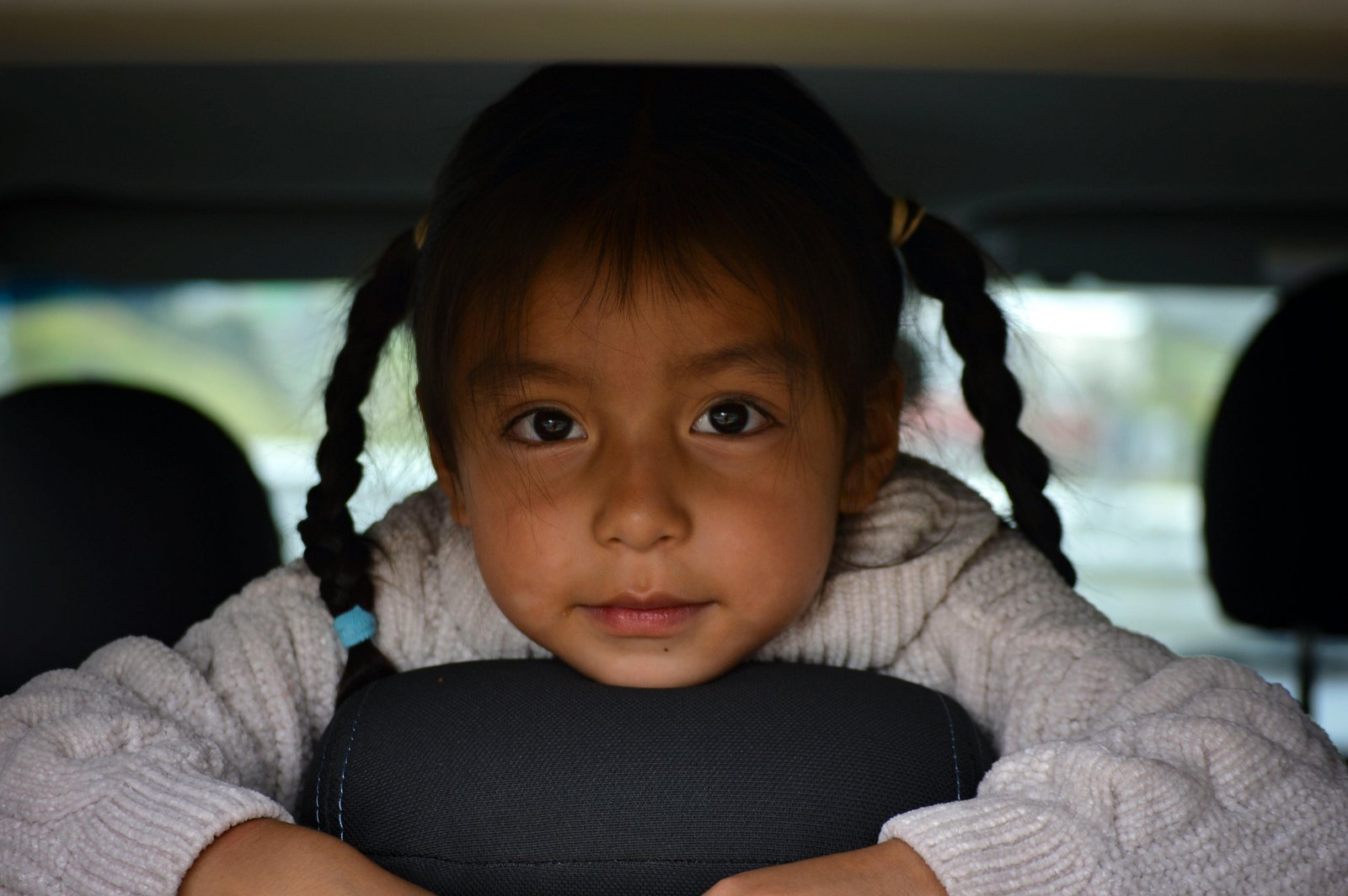
The courtroom was smaller than she expected.
La sala del tribunal era más pequeña de lo que esperaba.
She had imagined something like the ones on television — tall ceilings, wooden galleries, the kind of room where things mattered and people could tell.
Había imaginado algo como los de la televisión — techos altos, galerías de madera, el tipo de sala donde las cosas importaban y la gente podía notarlo.
This room had fluorescent lights.
Plastic chairs.
A photocopier in the hallway that someone kept using.
She sat with both feet hanging above the linoleum floor.
Se sentó con los pies colgando sobre el suelo de linóleo.
She had counted the chairs in the waiting area outside: forty-two. She counted them twice. The second count came out the same. She was the kind of child who noticed things like that — who found structure in the things she could still verify.
Había contado las sillas en la sala de espera exterior: cuarenta y dos. Las contó dos veces. La segunda vez salió lo mismo. Era el tipo de niña que notaba estas cosas — que encontraba estructura en lo que aún podía verificar.
Chapter II — The Language
Capítulo II — El Idioma
The interpreter was in a different state.
El intérprete estaba en otro estado.
His voice came through a telephone held by a court officer she had never met. He spoke Spanish. Her first language was Mam — one of twenty-two Mayan languages still spoken in the highlands of Guatemala.
Su voz llegó a través de un teléfono sostenido por un oficial del tribunal al que nunca había conocido. Él hablaba español. Su primera lengua era el mam — uno de los veintidós idiomas mayas que aún se hablan en las tierras altas de Guatemala.
She had learned some Spanish at the shelter.
Not legal Spanish.
Not court Spanish.
The kind you learn at night from other children who are also waiting. Words for food. Words for door. Words for the van that takes you somewhere they haven't explained.
Del tipo que se aprende de noche de otros niños que también esperan. Palabras para comida. Palabras para puerta. Palabras para la furgoneta que te lleva a algún lugar que no han explicado.
She had learned to nod."
Someone handed her headphones before the hearing began.
Alguien le dio unos auriculares antes de que comenzara la audiencia.
She held them the way you hold something breakable. A woman in a grey blazer reached across and placed them over her ears without speaking. The headphones translated English into Spanish. She understood some of it. She understood: Do you understand these proceedings?
Los sostuvo como se sostiene algo frágil. Una mujer con blazer gris se extendió y los colocó sobre sus oídos sin decir nada. Los auriculares traducían el inglés al español. Entendió algo. Entendió: ¿Comprende usted este procedimiento?
She said yes. She had learned that adults expect yes when they look at her that way.
Dijo que sí. Había aprendido que los adultos esperan un sí cuando la miran de esa manera.
Chapter III — The Judge
Capítulo III — El Juez
He had a photograph of mountains on his wall.
Tenía una fotografía de montañas en su pared.
Mountains she didn't recognize. Somewhere she had never been, framed in a room where she was being processed. Later she would think about that. The photograph. The mountains. The distance between a wall decoration and a child who couldn't read the forms on the table in front of her.
Montañas que ella no reconocía. Algún lugar al que nunca había ido, enmarcado en una sala donde estaban procesándola. Más tarde pensaría en eso. La fotografía. Las montañas. La distancia entre un adorno de pared y una niña que no podía leer los formularios sobre la mesa frente a ella.
The judge spoke quickly. He had seventeen cases that morning. Hers was the fourth.
El juez habló rápidamente. Tenía diecisiete casos esa mañana. El de ella era el cuarto.
He was not unkind. That was the part she kept returning to, afterward. Not unkind. Simply not designed for her. The system was not cruel in the way cruelty announces itself. It was something quieter — a building, a schedule, a language requirement, a budget line — none of which had ever imagined a nine-year-old girl from the Guatemalan highlands sitting alone in a plastic chair.
No era cruel. Esa era la parte a la que seguía volviendo, después. No cruel. Simplemente no diseñado para ella. El sistema no era cruel en la forma en que la crueldad se anuncia a sí misma. Era algo más silencioso — un edificio, un horario, un requisito de idioma, una línea presupuestaria — ninguno de los cuales había imaginado nunca a una niña de nueve años de las tierras altas de Guatemala sentada sola en una silla de plástico.
It was simply not designed for her at all."
Chapter IV — The Four Minutes
Capítulo IV — Los Cuatro Minutos
Her case was called at 9:47 a.m.
Su caso fue llamado a las 9:47 de la mañana.
It was concluded at 9:51 a.m.
Concluyó a las 9:51 de la mañana.
Four minutes.
Cuatro minutos.
She was nine years old. Her legal file was forty-seven pages. She had not been given a copy. No one had read it to her. No lawyer had explained it to her. There was no lawyer.
Tenía nueve años. Su expediente legal tenía cuarenta y siete páginas. No le habían dado una copia. Nadie se lo había leído. Ningún abogado se lo había explicado. No había abogado.
The judge asked if she understood the next steps. The telephone interpreter translated. She said yes.
El juez le preguntó si entendía los próximos pasos. El intérprete telefónico tradujo. Ella dijo que sí.
Her next hearing is scheduled for November 2027. She will be eleven years old.
Su próxima audiencia está programada para noviembre de 2027. Tendrá once años.
Chapter V — The Lobby
Capítulo V — La Sala de Espera
She waited forty-three minutes for the transportation van.
Esperó cuarenta y tres minutos la furgoneta de transporte.
A volunteer from a church two blocks away came through the lobby door carrying a canvas bag. Inside: juice boxes, crackers, a small drawing book with colored pencils. She distributed them without explaining who she was. She did not speak Mam. No one at the courthouse speaks Mam. She held out a juice box with both hands — like an offering — the way someone offers something when language has run out.
Una voluntaria de una iglesia a dos cuadras entró por la puerta principal cargando una bolsa de lona. Adentro: cajas de jugo, galletas, un pequeño cuaderno de dibujo con lápices de colores. Los distribuyó sin explicar quién era. No hablaba mam. Nadie en el tribunal habla mam. Extendió una caja de jugo con ambas manos — como una ofrenda — de la manera en que alguien ofrece algo cuando el lenguaje se ha agotado.
This was the kindest thing that happened that day.
Esta fue la cosa más amable que sucedió ese día.
The court record does not include it.
El registro del tribunal no lo incluye.
that a child needs more than a next court date."
What the record actually shows.
The narrative above is fictionalized. The system it describes is not. The following facts are drawn from public data, federal oversight reports, and documented humanitarian research. They are verifiable, citable, and ongoing.
guaranteed right to a government-appointed attorney for children in U.S. immigration proceedings. Children may appear — and regularly do — without any legal representation.
U.S. Federal Immigration Law · INA § 292
children appear in U.S. immigration court without a lawyer. Unrepresented children are five times less likely to receive legal protection.
Vera Institute of Justice · 2023
years old. The youngest documented age at which a child has appeared alone before a U.S. immigration judge. No lower age limit exists under current law.
Human Rights Watch · CLINIC · 2016–2024
cases currently pending in U.S. immigration courts — children included. Average wait for a hearing: over two years. Some cases extend to four or more.
TRAC Immigration · Syracuse University · 2025
Mayan languages spoken in Guatemala. Certified court interpreters exist for almost none of them in U.S. immigration proceedings. Spanish is used as a default.
UNHCR · American Immigration Council · 2023
children placed with sponsors that the U.S. government later acknowledged it could not reach for follow-up. Their current locations are unknown.
U.S. Senate Committee Report · HHS OIG · 2023
Documented Sources
- TRAC Immigration · Syracuse University
- Vera Institute of Justice
- Human Rights Watch
- UNICEF · Children Uprooted
- U.S. HHS Office of Inspector General
- American Immigration Council
- U.S. Senate Judiciary Committee
- Reuters Investigative Unit
Statement of Record
The system calls this
processing.
Children experience it
as fear.
Dignity Before Damage · 2026 · Share This
Communities are
already there.
While federal systems move at the pace of a backlogged court calendar, communities — volunteers, lawyers, churches, teachers, mutual-aid networks — are building the response infrastructure that should already exist. This is not charity. This is what organized civic society looks like when institutions fail.
Mientras los sistemas federales avanzan al ritmo de un calendario judicial atrasado, las comunidades — voluntarios, abogados, iglesias, maestros, redes de ayuda mutua — están construyendo la infraestructura de respuesta que ya debería existir. Esto no es caridad. Así es como se ve la sociedad civil organizada cuando las instituciones fallan.
Volunteer translation networks running 24/7.
Community members fluent in Mam, K'iche', Q'eqchi', and other Indigenous languages operate informal translation lines — often from personal phones, at no cost, at any hour — because no official system covers the gap.
Pro bono lawyers coordinating across state lines.
Attorneys across the country have built encrypted coordination networks — routing urgent cases between firms in hours. None of them are paid for this work. The legal system was not built to make it easy.
Churches and schools absorbing what courts do not provide.
Congregations track court dates. Teachers learn asylum timelines. Librarians study immigration law. Communities are filling an institutional vacuum with human attention — and doing it without compensation or recognition.
Rapid-response funding reaching families before deadlines close.
When a child is transferred, reunification windows close fast. Mutual-aid networks move money to the right hands within hours. What government calls bureaucracy, neighbors call an emergency.

Dignity Toolkit — Humanitarian Coordination Infrastructure
Dignity Toolkit is not an app. It is a coordination layer — built with frontline communities, not above them. One inbox. One number. One way to know who is responding to whom, without ever exposing a child's location, identity, or story. Privacy-first. Trauma-aware. Designed by the people who use it.
Learn about the infrastructure →Move with us
The record is still
being written.
A 501(c)(3) network · Fiscally sponsored by Good Shepherd Church · Humanitarian, not partisan